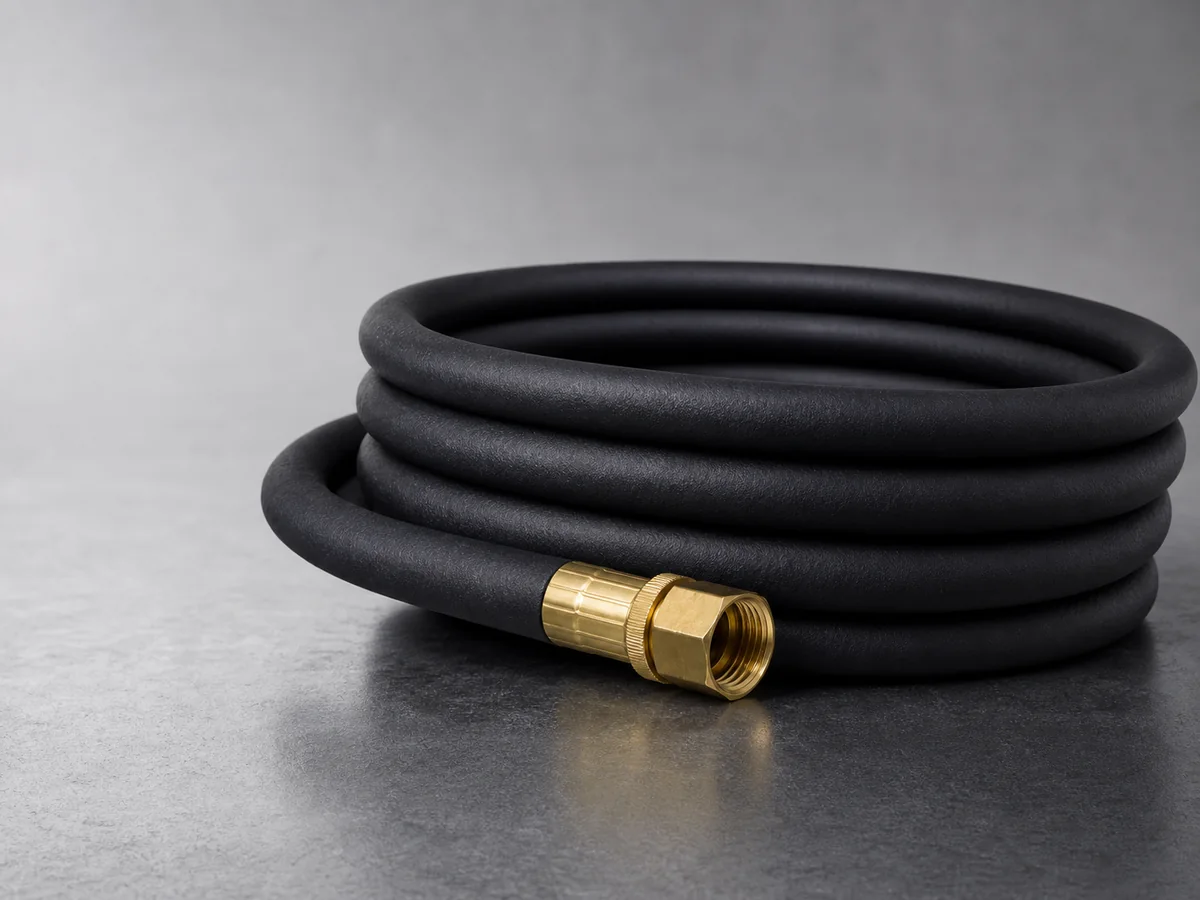
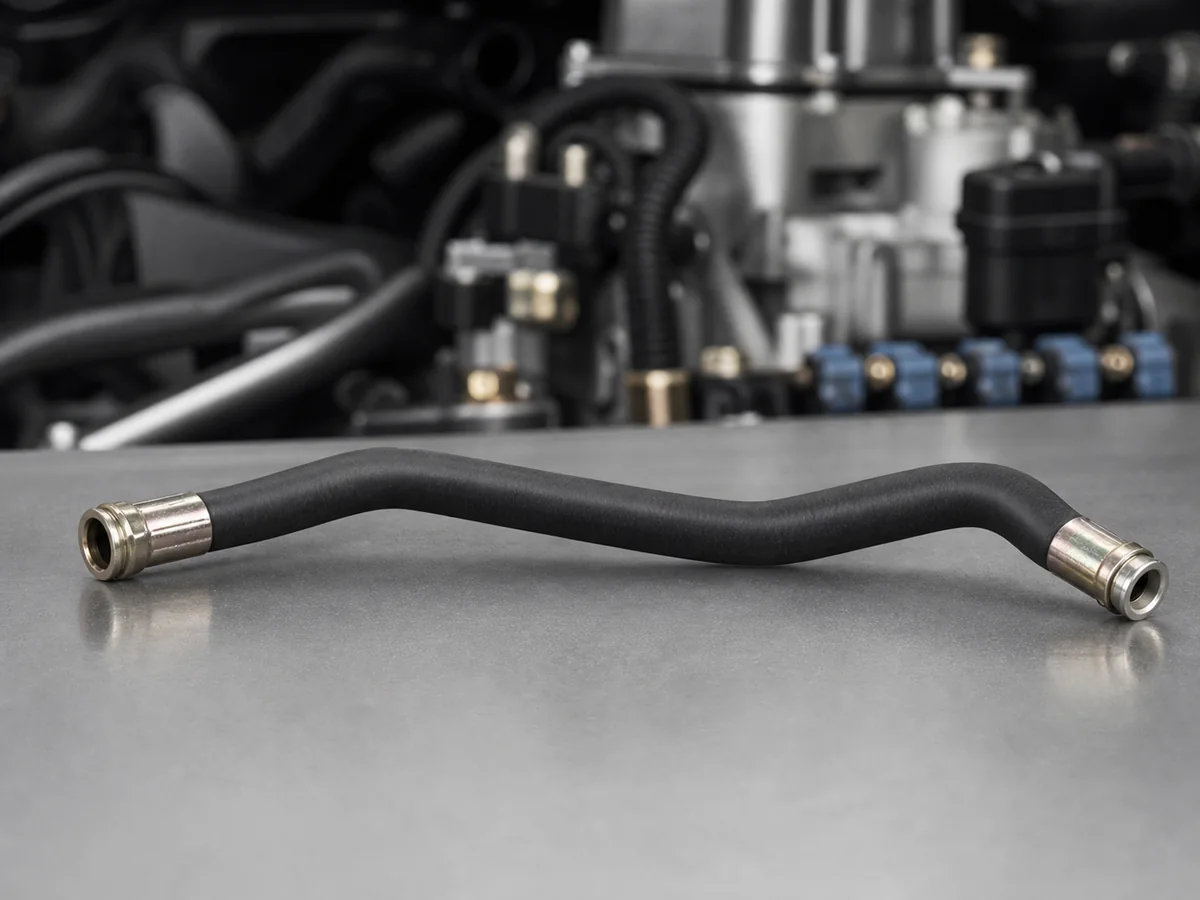
EN 1762 — LPG hoses
EN 1762 is the European standard for rubber LPG hoses. It classifies hoses into four types by maximum working pressure — Type A (10 bar), Type B (16 bar), Type C (20 bar) and Type D (25 bar) — and sets out tests for burst pressure, gas permeability, oil and ozone resistance and temperature performance.
EN 1762 is the harmonised European standard covering rubber hoses and hose assemblies for liquefied petroleum gas (LPG), both in the liquid and the vapour phase. It applies to propane, butane and propane-butane mixtures used in domestic, commercial and automotive (autogas) installations.
Scope and hose types
The standard classifies hoses by their maximum working pressure. Each type must withstand a minimum burst pressure several times higher than its rated working pressure, providing a safety margin against pressure surges.
| Type | Max. working pressure | Typical use |
|---|---|---|
| Type A | 10 bar | Low-pressure vapour phase, appliances |
| Type B | 16 bar | General LPG service |
| Type C | 20 bar | Higher-pressure systems |
| Type D | 25 bar | Liquid phase, autogas, demanding duty |
Key requirements
- Burst pressure well above the rated working pressure (typically a multiple of it).
- Low gas permeability of the inner tube to limit LPG loss through the wall.
- Resistance to oil, ageing and ozone in the cover.
- Operating temperature range commonly from about -30 °C to +70 °C.
- Flexibility and dimensional stability after pressure and bending tests.
How to select
Choose the type by phase and pressure: vapour-phase appliances usually need Type A or B, while liquid-phase and autogas duty calls for Type D. Confirm the bore size, the required length and the end fittings, and check that the cover material suits the installation environment (UV, abrasion, chemicals).
Compatibility
EN 1762 hoses are designed for propane and butane. For complete vehicle autogas systems the components must also meet ECE R67, which governs the full LPG fuel system on the vehicle.
Frequently asked questions
EN 1762 defines four types: Type A rated to 10 bar, Type B to 16 bar, Type C to 20 bar and Type D to 25 bar maximum working pressure.
Liquid-phase and autogas duty normally use Type D (25 bar), the highest-pressure class, combined with components that also meet ECE R67.
EN 1762 LPG hoses are typically rated for service from about -30 °C to +70 °C, though the exact range depends on the construction and cover compound.