
Petrol stations
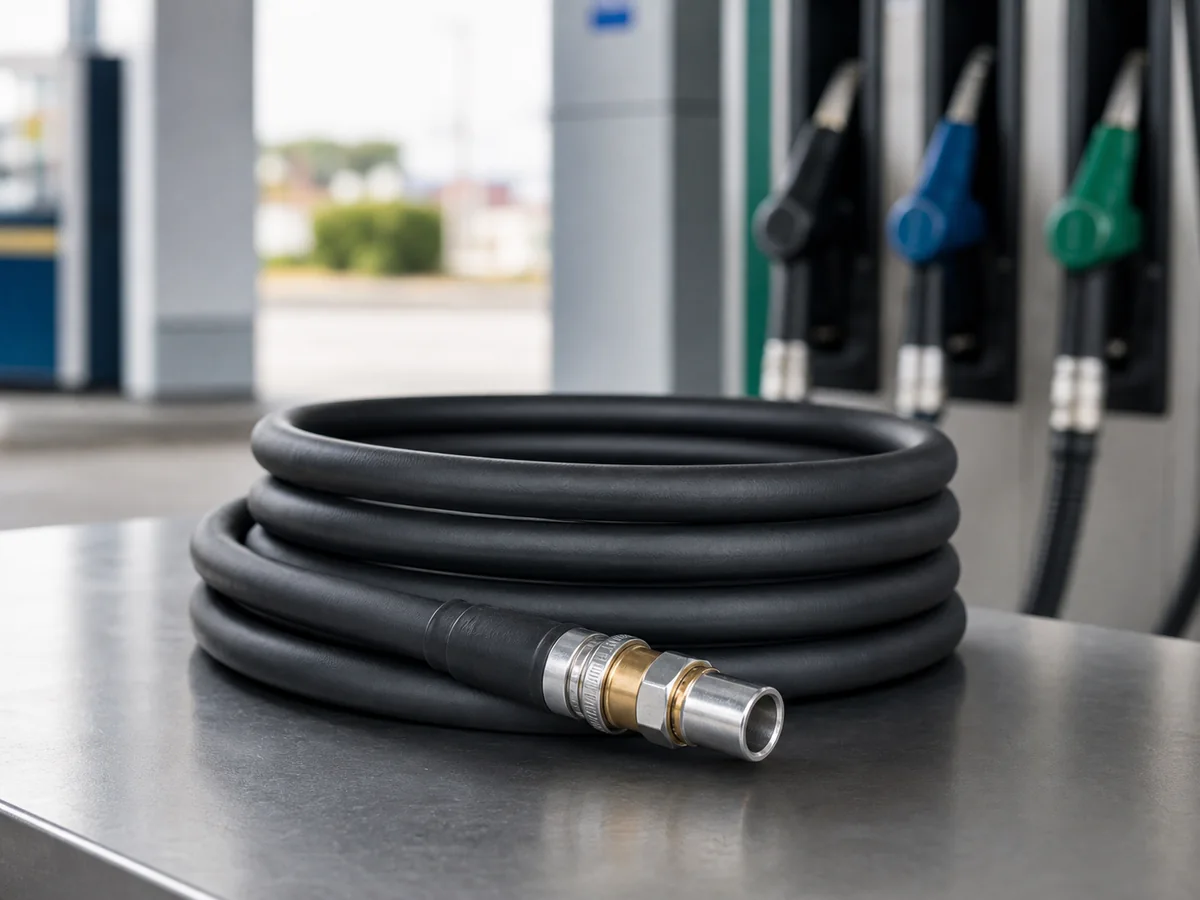
A petrol station needs two hose types: a dispenser hose to EN 1360 between pump and nozzle, and an antistatic bulk filling hose for tanker-to-tank delivery. Both must be electrically conductive to drain static, resist petrol, diesel and ethanol blends up to E10, and carry a clear standard marking and date.
On a forecourt the hose is the last component the fuel passes through before it reaches the customer, so it is also the part most exposed to wear, weather and abuse. Choosing the right hose is mainly about three things: the standard it is built to, its electrical conductivity, and its resistance to modern ethanol-blended fuels.
Which hose for which job
- Dispenser hoses connect the pump to the nozzle. They should comply with EN 1360, the standard for rubber hoses for measured fuel dispensing.
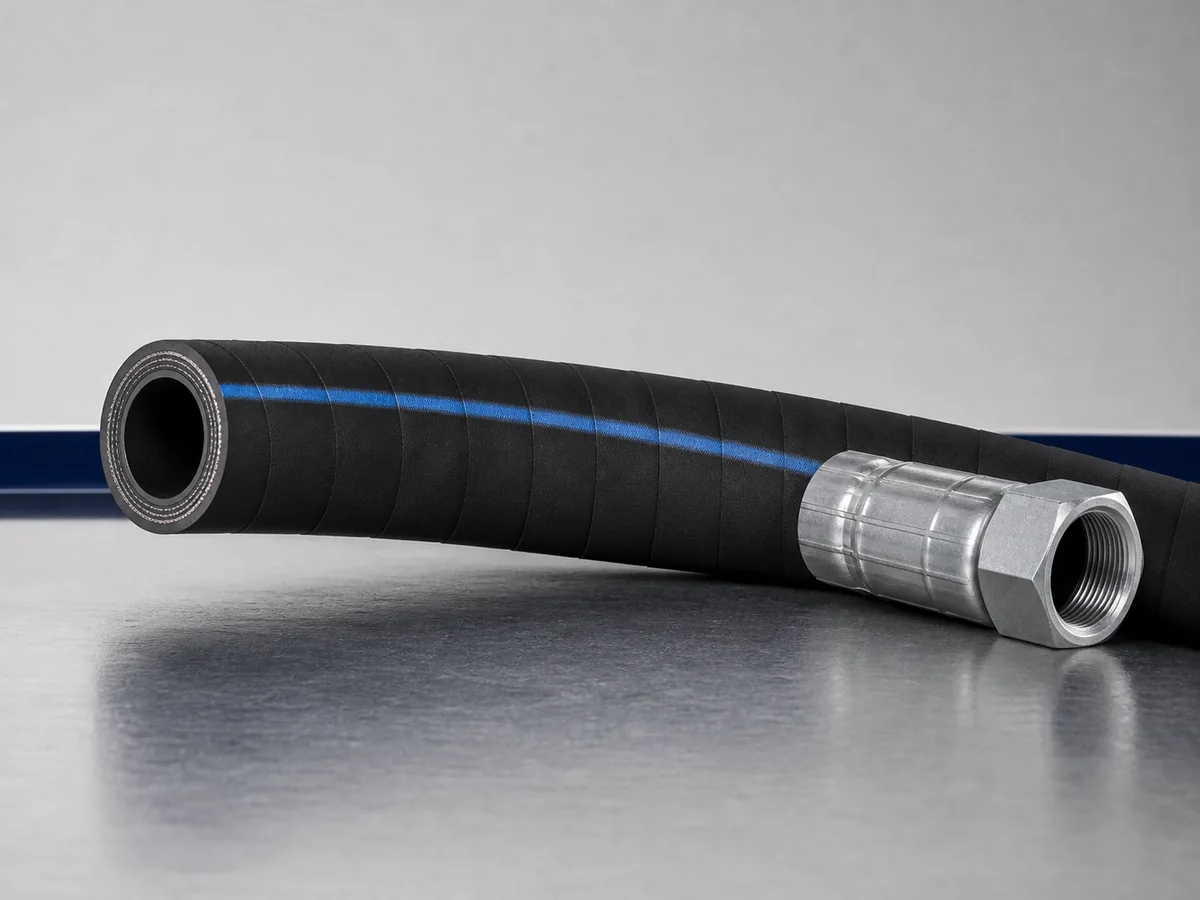
- Bulk filling hoses connect the road tanker to the underground tank during delivery and must handle higher flow and pressure.
What buyers should check
- Antistatic / conductive construction — petrol generates static; the hose must drain it safely to earth to prevent ignition.
- Ethanol resistance — confirm compatibility with E5 and E10 petrol, today’s standard at the pump.
- Standard marking — a legible EN 1360 marking and production date on the cover is what inspectors look for.
- Working pressure and bend radius — match the pump pressure and keep the hose flexible enough for daily refuelling.
Hoses are wear parts. Inspect for cracks, blistering and abrasion regularly and replace before failure rather than after.
Recommended hoses
Frequently asked questions
EN 1360 covers rubber hoses for measured fuel dispensing at the pump. The marking and production date should be printed on the hose cover.
Yes. The tube compound is formulated to resist petrol and ethanol blends up to E10 without swelling or hardening.
Fuel flow builds an electrostatic charge. A conductive hose drains that charge safely to earth, removing the spark risk during refuelling and delivery.
Inspect regularly and replace at the first sign of cracking, blistering or abrasion. Many operators set a fixed service interval rather than waiting for failure.